

Easy Plate EB
Enterobacteriaceae Testing and Easy Plate EB

The Enterobacteriaceae count is one of the most comprehensive ways to monitor hygiene in food production. Here we look at what this family of bacteria is, why it is counted and how Easy Plate EB makes the count easier.
Contents6 sections
What are Enterobacteriaceae?
Enterobacteriaceae are a large family of glucose-fermenting bacteria. Coliforms and E. coli belong to it, and so do pathogens such as Salmonella. Members of the family can be found in the gut, in the environment and in food production areas.
Why Enterobacteriaceae instead of coliforms?
Enterobacteriaceae are a wider group that includes the coliforms. As a hygiene indicator they therefore “catch” more bacteria: family members that do not ferment lactose, and so do not show up in a coliform count, are counted too. They are preferred especially:
- for following contamination after processing in heat-treated products,
- for hygiene control of dry foods and production areas,
- for judging process hygiene.
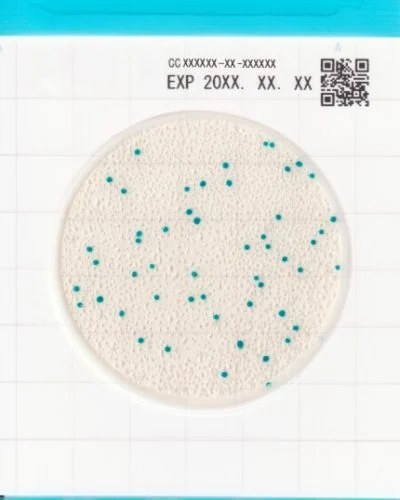
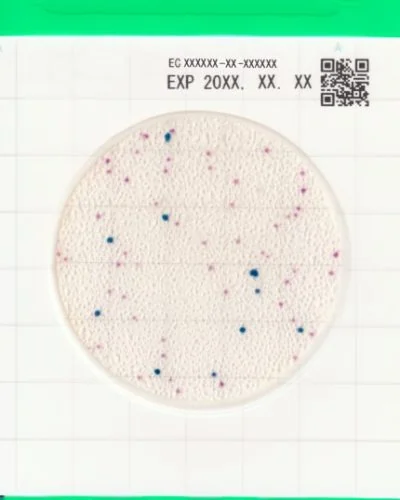
Which indicator applies to your product depends on the criteria you follow and on customer specifications. For coliform counts see our Easy Plate CC article, and for E. coli our Easy Plate EC article.
How are they counted the classic way?
The classic Enterobacteriaceae count uses Violet Red Bile Glucose (VRBG) agar. The medium is prepared and poured, the diluted sample is plated and typical colonies are counted after incubation.
How does Easy Plate EB work?
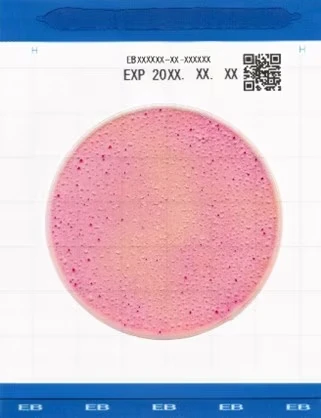
Easy Plate EB is a special medium formulation for cultivating Enterobacteriaceae: it contains VRBG medium, the same basis as the classic method, and a cold-water-soluble gelling agent that makes colony counting easy. It arrives ready to use and sterile, with no preparation or sterilisation needed. Colonies are easily identified within 24 ± 1 hours at 35 or 37 ± 1 °C.
- Target microorganism
- Enterobacteriaceae
- Incubation
- 24 ± 1 hours · 35 ± 1 °C or 37 ± 1 °C
- Storage (unopened)
- 2–8 °C
- Shelf life
- 18 months from the date of manufacture
- Packing
- 100 tests (25 tests × 4 bags)
- Certification
- AOAC PTM 032601
Agreement with the classic method
In the Easy Plate e-catalogue, EB results are compared with VRBG; the correlation coefficient is r = 0.93. The catalogue shows Klebsiella pneumoniae and E. coli on the plate, with examples from frozen pork and beef brisket. See the colony images in the e-catalogue.
Why Lotus Analitik?
Lotus Analitik is the Kikkoman Easy Plate distributor in Türkiye. We deliver Easy Plate EB from stock in Türkiye through the cold chain, install and train in your laboratory, and stay with you with technical support afterwards. Before you decide, you can ask for a trial sample and see Easy Plate EB for yourself.
We cover the whole range in our article on ready-to-use media.
The Easy Plate range
More from this series
- Easy Plate ACTotal Aerobic Count and Easy Plate AC
- Easy Plate AC-RAerobic Count in 24 Hours: Easy Plate AC-R
- Easy Plate CCColiform Count and Easy Plate CC
- Easy Plate ECE. coli and Coliforms on One Plate: Easy Plate EC
- Easy Plate YM-RYeast and Mould Count and Easy Plate YM-R
- Easy Plate SAStaphylococcus aureus Count in 24 Hours: Easy Plate SA
- Easy Plate EBEnterobacteriaceae Testing and Easy Plate EB
Products