


Ready-to-use media
No More Preparing Culture Media: Kikkoman Easy Plate Ready-to-Use Culture Media

You cannot tell by looking whether a food is safe; microbiological testing in the laboratory tells you. All of these tests share one need: a culture medium. Here we go through what our video shows in brief: what a culture medium is, how it is prepared the classic way, what ready-to-use media change, and which plate of the Kikkoman Easy Plate range to choose for which test.
Contents9 sections
- Why does microbiological testing matter for food hygiene?
- What is a culture medium, and how is it prepared the classic way?
- What are ready-to-use culture media?
- How does Kikkoman Easy Plate work?
- Which Easy Plate for which test?
- Storage, shelf life and packing
- Certification: AOAC PTM, MicroVal and NordVal
- Digitise colony counting too
- Why Lotus Analitik?
Why does microbiological testing matter for food hygiene?
A surface that looks clean or a product that looks fresh can carry microorganisms in numbers you cannot see. That is why food businesses and laboratories test regularly, from raw materials to finished products and from the production floor to the warehouse. The aim is both to protect consumers and to notice early when something goes wrong in production.
Routine tests usually count specific groups of microorganisms. Each group answers a different question:
- Total aerobic count: gives an idea of the overall microbial load of a product; one of the basic indicators of quality and shelf life.
- Coliforms and Enterobacteriaceae: followed as hygiene indicators; rising numbers can point to a lapse in hygiene during or after production.
- E. coli: known as an indicator of faecal contamination.
- Yeasts and moulds: answer questions about spoilage and shelf life in particular.
- Staphylococcus aureus: a bacterium linked to foodborne illness, monitored in products that are handled a lot.
All of these counts rest on the same principle: the microorganisms in the sample grow on a suitable culture medium and form colonies that can be counted. So the reliability of the result depends largely on the quality of the medium and on preparing it correctly.
What is a culture medium, and how is it prepared the classic way?
A culture medium contains the nutrients microorganisms need to grow in the laboratory. Selective media support the group you are looking for and suppress the others, so that coliforms, for example, can be counted apart from other bacteria.
In the classic method the medium usually arrives as a powder and is prepared in the laboratory:
- 01
The powder is weighed and dissolved in water.
- 02
It is sterilised in an autoclave.
- 03
It is cooled to the right temperature and poured into Petri dishes.
- 04
The dishes are left to set and then kept cold until they are used.
Each of these steps takes time, equipment and care. The queue at the autoclave, stacks of Petri dishes filling the fridge and the rush to reorder before stock runs out are exactly what you see in the first scenes of our video. And a small slip during preparation can affect the result.
What are ready-to-use culture media?
Ready-to-use culture media arrive in the laboratory sterile and ready to use. Weighing, dissolving, autoclaving and pouring leave your laboratory; the sample is applied directly to the plate. This brings three concrete benefits:
- Time: the hours spent on media preparation and sterilisation go into analysis.
- Fewer preparation errors: since the preparation steps are not done in the laboratory, the errors they can cause are avoided.
- Space and order: thin packs replace stacks of poured dishes; stock control and ordering become simpler.
The basis of the work stays the same: microorganisms grow on a medium and the colonies are counted. What changes is the effort it takes to get there.
How does Kikkoman Easy Plate work?
Easy Plate is Kikkoman’s range of ready-to-use, sterile culture media; Lotus Analitik is the Kikkoman Easy Plate distributor in Türkiye. The plates arrive ready to use, need no extra tools, and the sample spreads easily on the plate. The inoculated plate goes into the incubator, and when the time is up the coloured colonies are counted.
Colour is the detail that makes counting easier. Chromogenic substrates and indicators in the plates stain the colonies in distinct colours:
- AC and AC-R: aerobic bacteria form red colonies.
- CC: coliforms appear blue.
- EC: E. coli turns blue-purple to navy, non-E. coli coliforms pink to red-purple, so both groups are counted separately on the same plate.
- YM-R: a redox indicator forms purple colonies. Mould colonies spread over a wide area with diffuse edges; yeast colonies are small with distinct edges. Colonies are easy to tell apart even with food particles present.
- SA: S. aureus forms bright blue colonies; inhibitors in the plate suppress the growth of other microorganisms.
- EB: contains Violet Red Bile Glucose (VRBG) medium and a cold-water-soluble gelling agent; colonies are easy to identify in 24 ± 1 hours.
How well the results agree with the classic method is shown by the manufacturer’s comparison data. The charts in the Easy Plate e-catalogue compare Easy Plate results with classic reference media such as plate count agar, VRB agar and Baird-Parker agar; depending on the plate, the correlation coefficients range from 0.93 to 1.00.
One point to keep in mind with the EC plate: most E. coli produce β-glucuronidase, but E. coli O157 does not. O157 therefore shows the same red-purple colour as non-E. coli coliforms; take this into account when reading the results.
Which Easy Plate for which test?
The range has seven plates. The choice depends on the group of microorganisms you are looking for and on how soon you need the result:
| Plate | Target microorganism | Incubation | Shelf life |
|---|---|---|---|
| AC | Aerobic bacteria | 48 ± 2 hours35 ± 1 °C | 18 months |
| AC-R | Aerobic bacteria | 24 ± 1 hours35 ± 1 °C | 12 months* |
| CC | Coliform bacteria | 24 ± 1 hours35 ± 1 °C | 18 months |
| EC | E. coli and coliforms | 24 ± 1 hours35 ± 1 °C | 18 months |
| YM-R | Yeasts and moulds | 48–72 hours25 ± 1 °C | 18 months |
| SA | Staphylococcus aureus | 24 ± 1 hours35 ± 1 °C or 37 ± 1 °C | 12 months |
| EB | Enterobacteriaceae | 24 ± 1 hours35 ± 1 °C or 37 ± 1 °C | 18 months |
* AC-R: lots manufactured on or after 18 June 2026 have a shelf life of 18 months.
For aerobic counts there are two options: AC gives results in 48 ± 2 hours, AC-R in 24 ± 1 hours. For S. aureus the difference is even clearer: the 48-hour incubation on classic Baird-Parker agar and mannitol salt agar with egg yolk drops to 24 ± 1 hours with Easy Plate SA.
Storage, shelf life and packing
Unopened packs are stored at 2–8 °C. Shelf life from the date of manufacture is 18 months for AC, CC, EC, YM-R and EB, and 12 months for SA. AC-R has a shelf life of 12 months, rising to 18 months for lots manufactured on or after 18 June 2026. In every case, follow the expiry date on the pack.
Each pack holds 100 tests in four separate bags of 25. The thin, flat bags take up little room in storage and in the incubator: Easy Plate needs only 5% of the space of conventional Petri dishes (10 Petri dishes against 10 Easy Plates). That means savings in space and energy.
Our video sums up the times briefly: “24 to 48 hours” for incubation and “18 months” for shelf life. These figures apply to most of the range; YM-R incubates for 48–72 hours, and the shelf lives of SA and AC-R are as given above.
Certification: AOAC PTM, MicroVal and NordVal
The whole Easy Plate range is AOAC PTM certified. The AC, CC, EC, YM-R and SA plates are also MicroVal and NordVal certified. The certificate numbers are on each product page.
AOAC PTM (Performance Tested Methods) is the independent validation programme the AOAC Research Institute runs for test methods: independent studies show that the method performs as the manufacturer states. MicroVal and NordVal are European and Nordic programmes that validate alternative microbiological methods against reference methods. For a laboratory, these certificates make it easier to trust the results and to explain the method during audits.
Digitise colony counting too
Counting is the most labour-intensive step of microbiological testing and the one that varies most from person to person. The Easy Plate Colony Counting System automatically counts and analyses the colonies on a scanned Easy Plate. It is simpler and faster than counting by hand and reduces the differences between operators and the effect of skill level. The software is a free download; imaging needs a Brother ADS-4300N scanner, which we can help you source.
Why Lotus Analitik?
We do not just deliver the product and leave. As the Kikkoman Easy Plate distributor in Türkiye:
- We deliver Easy Plate from stock in Türkiye, through the cold chain.
- Before you decide, you can ask for a trial sample and see Easy Plate for yourself.
- We install and train in your laboratory, then stay with you with technical support.
- With 15 years of installation, sales and consultancy experience, we choose the right plates with you.
For your laboratory, ask for a trial sample or a quote, or explore the Easy Plate range.
The Easy Plate range
The Easy Plate range: an article for each plate
- Easy Plate ACTotal Aerobic Count and Easy Plate AC
- Easy Plate AC-RAerobic Count in 24 Hours: Easy Plate AC-R
- Easy Plate CCColiform Count and Easy Plate CC
- Easy Plate ECE. coli and Coliforms on One Plate: Easy Plate EC
- Easy Plate YM-RYeast and Mould Count and Easy Plate YM-R
- Easy Plate SAStaphylococcus aureus Count in 24 Hours: Easy Plate SA
- Easy Plate EBEnterobacteriaceae Testing and Easy Plate EB
Products
Products in this article
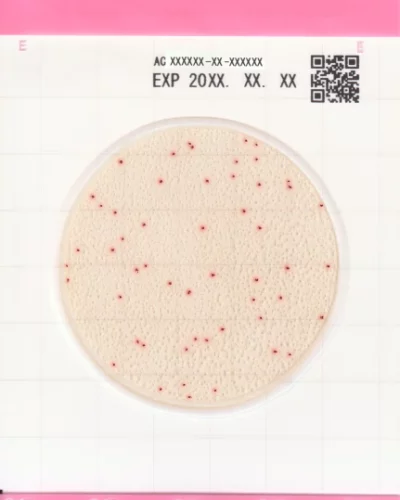 ACAerobic bacteriaEasy Plate ACAOAC PTM certified
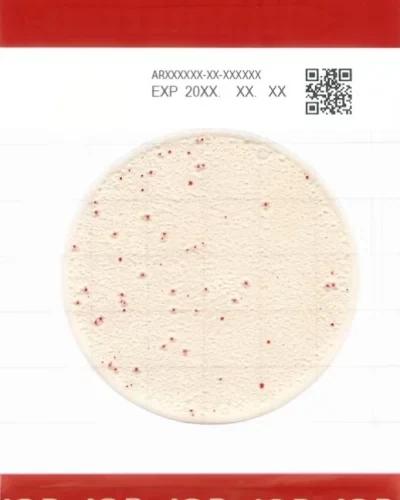 AC-RAerobic bacteriaEasy Plate AC-RAOAC PTM certified
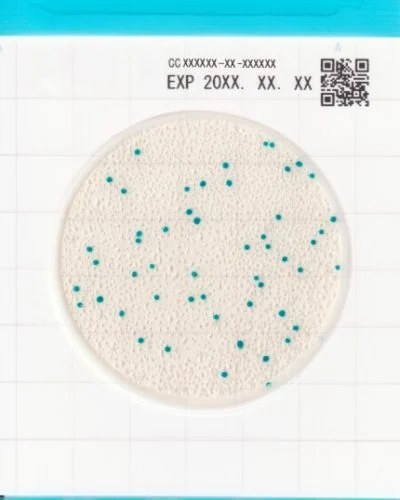 CCColiform bacteriaEasy Plate CCAOAC PTM certified
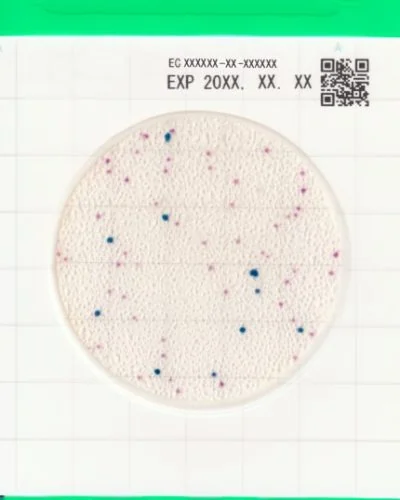 ECE. coli and coliformsEasy Plate ECAOAC PTM certified
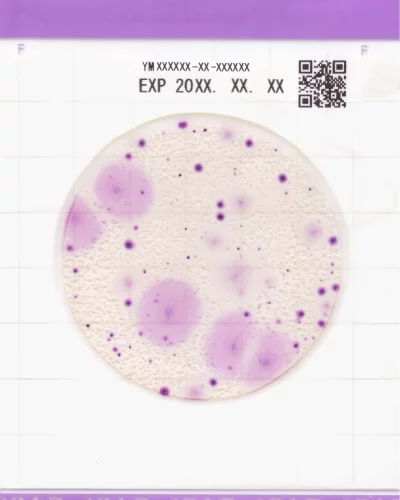 YM-RYeasts and mouldsEasy Plate YM-RAOAC PTM certified
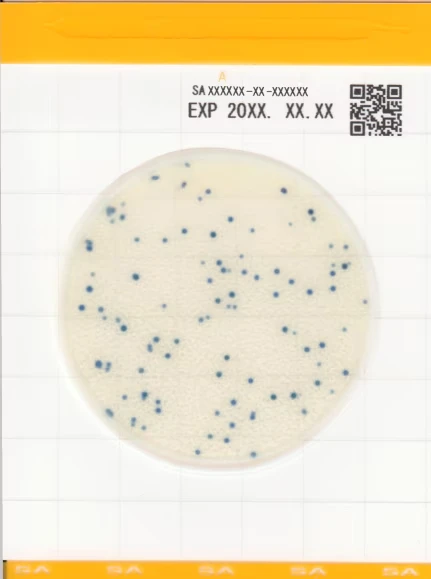 SAStaphylococcus aureusEasy Plate SAAOAC PTM certified
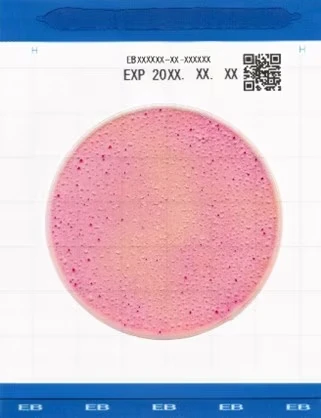 EBEnterobacteriaceaeEasy Plate EBAOAC PTM certified
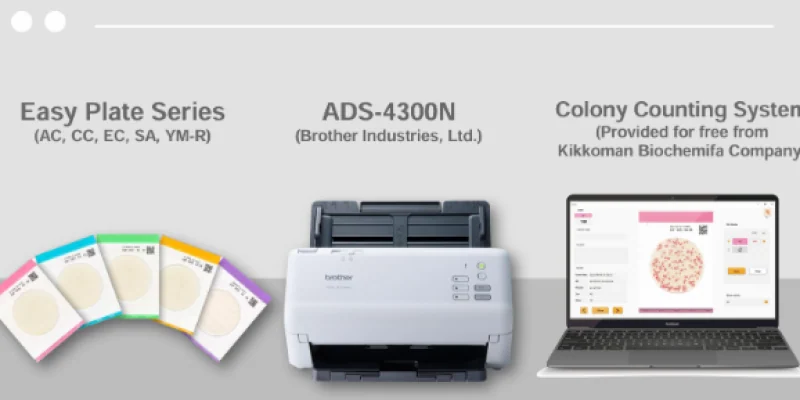 Easy PlateEasy Plate Colony Counting SystemAutomatic counting