

Lab Tip #3
Lab Tip #3: How Should Hygiene Swabs Be Stored?
In ATP hygiene monitoring, the reliability of the result also depends on how the swab was stored before the measurement. For LuciPac A3 Surface swabs the rule is simple: in the fridge, at +4 °C.
Contents3 sections
Storage conditions and shelf life
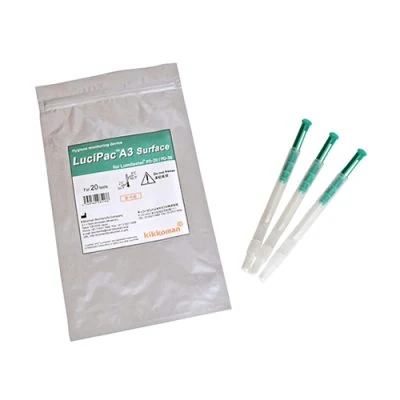
LuciPac A3 Surface swabs must be kept at +4 °C. Their shelf life changes a great deal with storage temperature:
- At +4 °C: 15 months
- At room temperature: 14 days
- At 30 °C: 5 days
The difference shows how sensitive the measuring reagents inside the swab are to temperature. A swab stored the wrong way can affect the reliability of the measurement.
Practical tips for the field
- Put the swabs in the fridge (+4 °C) as soon as they arrive.
- Take out only as many swabs as you will use that day.
- Keep swabs that have been at room temperature apart, and note when their 14 days started.
- In summer and in warm production areas, do not leave swabs in a car or in the sun; at 30 °C their life drops to 5 days.
- Do not use swabs past their expiry date; plan your orders around how fast you use them.
What does LuciPac A3 Surface measure?
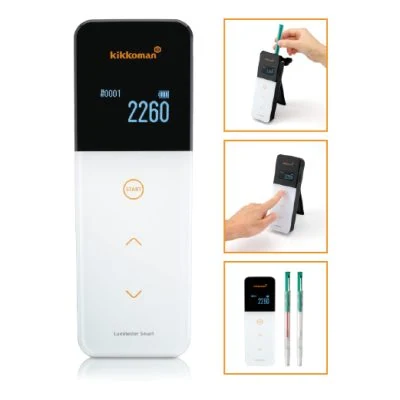
LuciPac A3 Surface is the most sensitive hygiene monitoring swab, used with Lumitester hygiene monitors. Kikkoman’s ATP cycling method lets it measure not only ATP but also ADP and AMP. This high sensitivity is needed to detect residues thoroughly in processed meat, fish and chicken products. The swab is AOAC PTM 051901 certified.
We explain why measuring ATP alone may not be enough in Lab Tip #5.
Contact us about LuciPac A3 Surface and Lumitester Smart. You will find the other posts of the Lotus Analitik lab tips series below.
Lab Tips
More from this series
- Lab Tip #1Lab Tip #1: How to Make the First Dilution
- Lab Tip #2Lab Tip #2: Why Is There Salt in Dilution Fluid?
- Lab Tip #3Lab Tip #3: How Should Hygiene Swabs Be Stored?
- Lab Tip #4Lab Tip #4: How Should Easy Plate Be Stored?
- Lab Tip #5Lab Tip #5: Is Measuring ATP Alone Enough?
- Lab Tip #6Lab Tip #6: When Should Frying Oil Be Changed?
- Lab Tip #7Lab Tip #7: Why Does pH Matter So Much?
- Lab Tip #8Lab Tip #8: What Is Water Activity?
Products